



Natural Organic Food Products & Ingredient Sourcing Company
China Top Food Sustainability Solutions for Global Buyers
China is becoming a practical testing ground for food sustainability solutions serving global buyers. Its food manufacturers are upgrading farms, factories, warehouses, and logistics networks at the same time. Solar panels now cover some processing roofs. Digital platforms can trace rice, tea, seafood, and packaged foods back to production areas. Yet technology alone does not guarantee responsible sourcing.
Jason Clay, former senior vice president of markets at WWF, has said, “The biggest challenge is to make sustainability the norm, not the exception.” His observation remains highly relevant to Chinese food supply chains. Leading suppliers are reducing water use, measuring carbon emissions, recovering heat, and redesigning packaging. Some are also improving cold-chain efficiency, treating wastewater, and working with farmers on soil health. These actions can lower environmental pressure while supporting more stable purchasing relationships.
The strongest programs combine factory records with independent audits, verified certifications, and clear supplier reporting. Buyers should examine how data is collected, not only how attractive the sustainability claims appear. Scope three emissions can remain difficult to calculate. Small farms may lack expensive monitoring systems. Progress is uneven.
That matters.
A credible China sourcing strategy should therefore reward measurable improvement, not demand instant perfection. Buyers can request product-level traceability, energy records, responsible labor practices, and evidence of corrective actions. They should also compare environmental results across suppliers and seasons. The best food sustainability solutions are practical, transparent, and adaptable. They connect commercial value with cleaner production, stronger rural livelihoods, and more resilient global food trade. There is still room for doubt, and that doubt should encourage better verification.
China’s Food Sustainability Landscape and Global Market Drivers
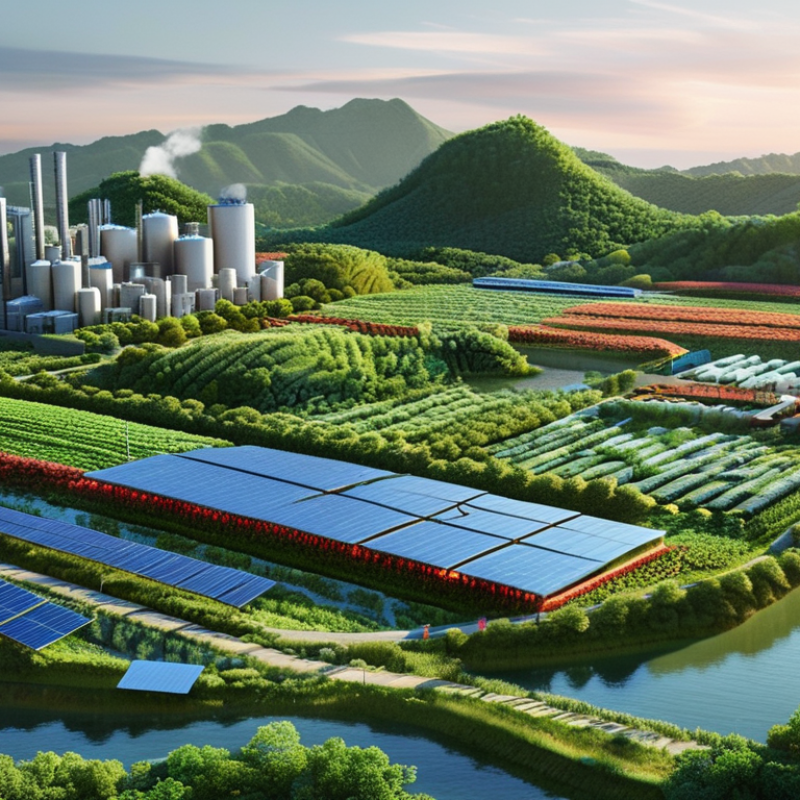
China’s food sustainability landscape is changing from isolated factory projects into supply-chain planning. Export-oriented processors now examine water use, energy intensity, packaging weight, and traceability together. In production zones, rooftop solar, heat recovery, wastewater treatment, and digital batch records are becoming practical investments. Yet progress varies widely. A modern facility may share precise emissions data, while a smaller supplier still relies on paper logs. This gap matters to global buyers.
Global market drivers are raising the standard. Importers face retailer questionnaires, climate disclosures, deforestation controls, and stricter residue and packaging expectations. Customers also want credible claims, not vague green language. Buyers increasingly request farm coordinates, audit records, carbon calculations, and evidence of worker protections. China’s export suppliers must translate local improvements into internationally understandable data. Clear measurement builds trust. Cheap claims do not.
Cost remains a difficult driver. Energy efficiency can reduce operating expenses, but advanced equipment requires capital, training, and reliable maintenance. Smaller producers may need shared testing, financing, and technical guidance. Even carbon accounting is imperfect when electricity factors or farm data change. Responsible buyers should compare methods, question unusually low figures, and review improvement plans over time. Sustainability is not a polished certificate. It is a process with visible gaps.
China Top Food Sustainability Solutions for Global Buyers - China’s Food Sustainability Landscape and Global Market Drivers
| Sustainability Dimension | Verified Data Point | China Food-System Relevance | Solution Areas for Global Buyers | Buyer Evidence to Request |
|---|---|---|---|---|
| Food Production Scale | China produced approximately 706.5 million tonnes of grain in 2024, according to the National Bureau of Statistics of China. | Large production volumes create significant opportunities to reduce input use, post-harvest losses, energy consumption and emissions across agricultural supply chains. | Precision agriculture, efficient drying and storage, low-loss handling, regenerative practices and digital farm monitoring. | Production-volume records, crop-input data, water and energy records, post-harvest loss rates and farm-level improvement plans. |
| Agrifood-System Emissions | Agrifood systems generated approximately 31% of global anthropogenic greenhouse-gas emissions in 2019 according to FAO. | International buyers increasingly require emissions data covering farming, processing, packaging, refrigeration, transport and waste. | Product carbon-footprint assessment, renewable electricity, energy-efficient processing, low-carbon logistics and methane or nitrous-oxide reduction. | Verified greenhouse-gas inventory, calculation boundary, emission factors, energy mix and third-party assurance where available. |
| Food Loss and Waste | An estimated 1.05 billion tonnes of food waste was generated globally in 2022; approximately 19% of food available to consumers was wasted at retail, food-service and household levels, according to UNEP. | Loss prevention can improve export margins while reducing embedded land, water, energy and emissions impacts. | Shelf-life extension, improved grading, moisture control, demand forecasting, surplus redistribution and by-product utilization. | Mass-balance records, loss-and-waste baseline, expiry-performance data, rejected-batch rates and documented reduction results. |
| Water Stewardship | Agriculture accounts for approximately 70% of global freshwater withdrawals, based on FAO water-resource assessments. | Water-intensive crops and food processing operations face increasing scrutiny in water-stressed regions and export markets. | Drip irrigation, water metering, wastewater reuse, closed-loop cleaning, process optimization and watershed-risk assessment. | Water withdrawal and consumption by site, source-risk assessment, discharge quality, reuse ratio and site-level improvement targets. |
| China Climate Commitments | China has announced national targets to peak carbon dioxide emissions before 2030 and achieve carbon neutrality before 2060. | Food exporters and processors are under growing pressure to align energy, production and supply-chain planning with national decarbonization goals. | Renewable power procurement, energy-efficiency retrofits, electrification, low-carbon refrigeration and supply-chain emissions management. | Energy-consumption trends, renewable-electricity evidence, emissions-reduction targets, equipment-efficiency records and implementation timelines. |
| Traceability and Food Safety | China’s Food Safety Law requires food producers and operators to establish a food-safety traceability system appropriate to their activities. | Traceability is increasingly connected with sustainability claims, origin verification, recall readiness and responsible sourcing. | Digital lot tracking, supplier mapping, farm-to-batch records, QR-enabled documentation and automated recall systems. | One-step-back and one-step-forward records, lot identifiers, supplier approvals, recall tests and data-retention procedures. |
| Packaging Circularity | Global packaging regulation is moving toward higher recyclability, reduced unnecessary material use, recycled content and better packaging-waste data. | Export packaging must balance product protection, food safety, transport durability and destination-market circularity requirements. | Lightweight packaging, recyclable mono-material formats, recycled content, reusable transport packaging and packaging redesign. | Material composition, packaging weight per product unit, recyclability assessment, recycled-content percentage and disposal guidance. |
| Deforestation-Free Sourcing | The European Union Deforestation Regulation covers cattle, cocoa, coffee, oil palm, rubber, soya and wood, including many derived products. | Chinese suppliers using affected agricultural commodities may need stronger plot-level origin evidence and geolocation data for EU-bound shipments. | Geospatial supplier mapping, deforestation-risk screening, segregated sourcing and digital due-diligence documentation. | Commodity origin, farm or plot geolocation, production date, legality evidence, risk assessment and corrective-action records. |
| Responsible Agricultural Inputs | FAO identifies fertilizer and energy use, land-use change, livestock, fisheries, forestry and food supply-chain activities as major sources of agrifood emissions. | Input efficiency is relevant to both farm profitability and buyer expectations for lower upstream environmental impacts. | Soil testing, nutrient-use efficiency, integrated pest management, biological inputs and farm-management digitization. | Fertilizer and pesticide application records, soil-health indicators, supplier training, restricted-substance controls and yield-per-input data. |
| Export-Market Disclosure | Major markets increasingly request comparable data on climate, water, labor, sourcing, packaging and supply-chain due diligence through regulation and buyer procurement standards. | Suppliers that can provide consistent, auditable sustainability data are better positioned for long-term international contracts. | Supplier codes of conduct, ESG data platforms, life-cycle assessment, independent audits and corrective-action management. | Policy documents, KPI definitions, reporting boundaries, audit reports, grievance procedures and evidence linked to each sustainability claim. |
Related Posts
-

How to Embrace a Plant Based Lifestyle with Simple Tips?
-

How to Embrace a Plant Based Lifestyle in 2026?
-
2026 Best Food Sustainability Solutions for Buyers
-

Top 10 Benefits of a Plant Based Diet for Health and Wellness?
-

How will the future of plant based food shape global markets?
-

How to Transition to a Plant Based Lifestyle Successfully?